Winter bike care: why tires, chains and batteries struggle in the cold
Drop the temperature by 20°C and your tire pressure drops with it — and lithium batteries should never be charged below freezing. Here is how to keep your bike running all winter, and why.
Riders are not the only ones who feel the cold. Tire pressure falls on its own, chains get dirty fast on wet roads, and lights and e-bike batteries lose power. Most winter breakdowns can be avoided if you know what to expect.
Tires: air pumped indoors shrinks outside
Air pressure falls as temperature falls. A road tire set to 80 psi in a 68°F (20°C) room drops to about 74 psi at 32°F (0°C), using the gas law. Nothing leaked — it is just the temperature.
Low pressure raises the risk of pinch flats and increases rolling resistance. In winter, check pressure right before you leave, and if you pump indoors, go slightly above your target — but never above the maximum printed on the tire sidewall.
Chains: wet roads and road salt
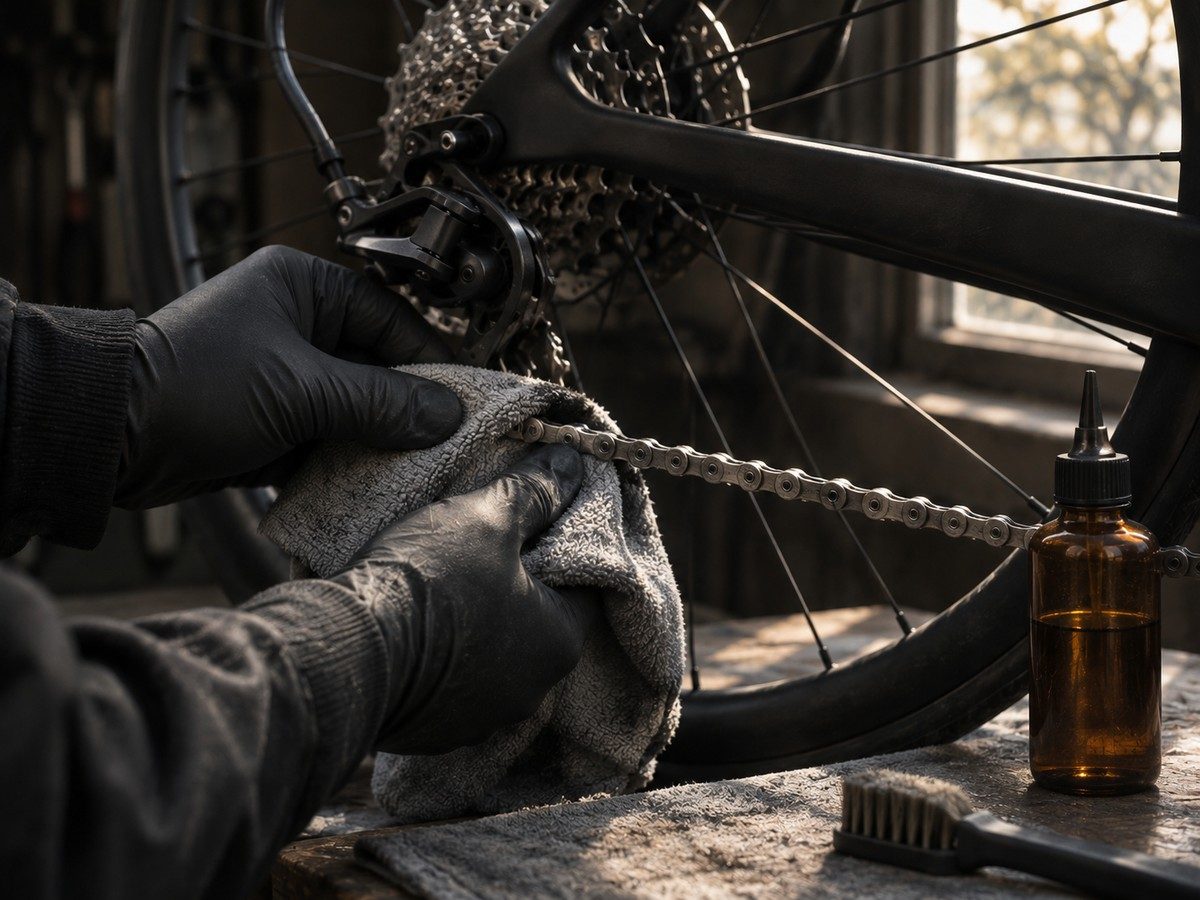
Winter roads carry meltwater and de-icing salt, and salty water rusts chains and gears quickly. After a wet ride, wipe the chain dry and re-lube once it has dried. A wet-type lube lasts longer in winter because rain washes it off less easily.
Batteries: do not charge below freezing
The lithium-ion batteries in lights, bike computers and e-bikes dislike the cold. According to Battery University, lithium-ion cells should not be charged below 0°C (32°F): the pack may look like it charges normally while metallic lithium plates inside, permanently harming performance and safety. Below 5°C, it recommends reducing the charge current.
So when a battery comes in from the cold, let it warm to room temperature before charging. It is also normal for batteries to drain faster in winter, since usable capacity drops in the cold. For a long ride, leave with lights fully charged and keep spares close to your body, such as in a jersey pocket.
| Part | What winter does | What to do |
|---|---|---|
| Tires | Pressure drops as it gets colder | Check right before riding; slightly higher within the max |
| Chain & gears | Rust from salt and water | Wipe after wet rides, lube once dry |
| Battery | Less capacity; damage if charged below 0°C | Warm to room temperature before charging |
| Brakes | Longer stopping on wet rims/discs | Brake earlier and more gently |
Storage: indoors is best
Store your bike indoors if you can. It protects batteries and parts from freezing and keeps salt from drying on the frame. If it has to stay outside, use a cover and bring the battery and lights inside.
Check once a month
Once a month in winter, look at brake pad wear, tire condition and chain rust. It saves you a big repair bill in spring.