Winter running: how many layers do you actually need?
Once you start moving, your body feels 10–20°F warmer than the air. If you feel slightly cold for the first three minutes, you dressed right. Here is a layer-by-temperature guide.
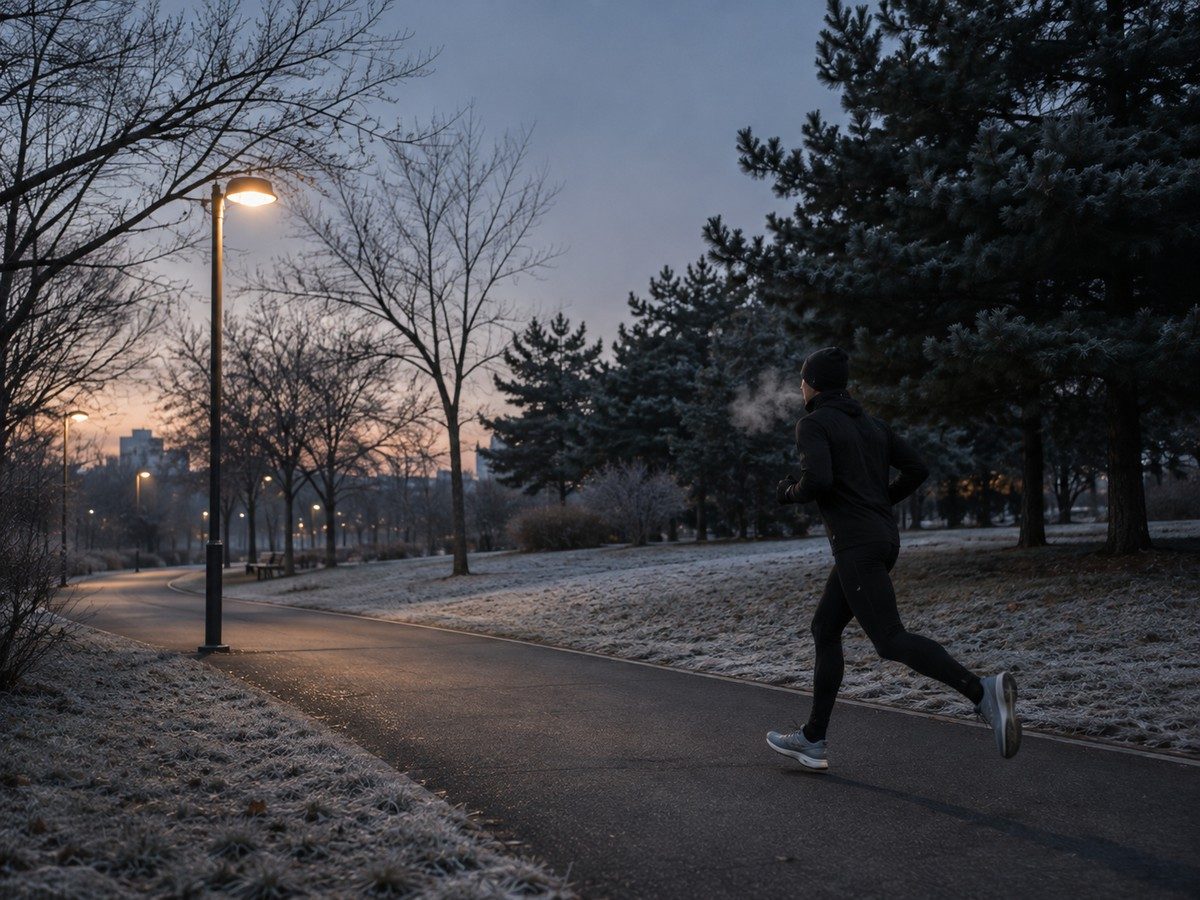
Most people overdress on their first cold run. It feels great at the door, but ten minutes in you are sweating, and once that sweat cools you end up colder than if you had worn less. The goal of winter running clothes is not to be warm — it is to keep sweat from chilling you.
Dress for 10–20°F warmer than the forecast
Mayo Clinic advice, as reported by NPR, is that once you get moving your body feels about 15–20°F warmer than it actually is. ASICS, citing Runner's World, suggests adding 10–15°F for a short easy run and about 20°F for a long or fast one.
That means feeling a little chilly for the first three minutes is the sign of a good choice. If you are warm from the first step, you will be too hot halfway.
What each layer does
Each layer has a job. The base layer against your skin should move sweat away quickly; cotton holds moisture and dries slowly, so leave it at home in winter. The mid layer traps air to hold heat, and the outer shell blocks wind, rain and snow.
You will not need all three every day. Add or remove one layer depending on temperature and wind.
| Temperature | Top | Bottom | Hands & head |
|---|---|---|---|
| 40–50°F (4–10°C) | One long-sleeve technical shirt | Shorts or 3/4 tights | None, or light gloves |
| 30–40°F (-1–4°C) | Long sleeve + light mid layer | Full-length tights | Light gloves, beanie over the ears |
| 20–30°F (-7– -1°C) | Long sleeve + mid layer + wind shell | Thermal tights | Gloves, beanie, neck gaiter |
| Below 20°F (-7°C) | All three, windproof shell | Thermal tights + wind pants | Heavy gloves, gaiter over the face |
The table combines temperature guidance from Fleet Feet and Brooks. Brooks recommends adding weather protection to your layers once it drops below 30°F.
Wind moves you up a row
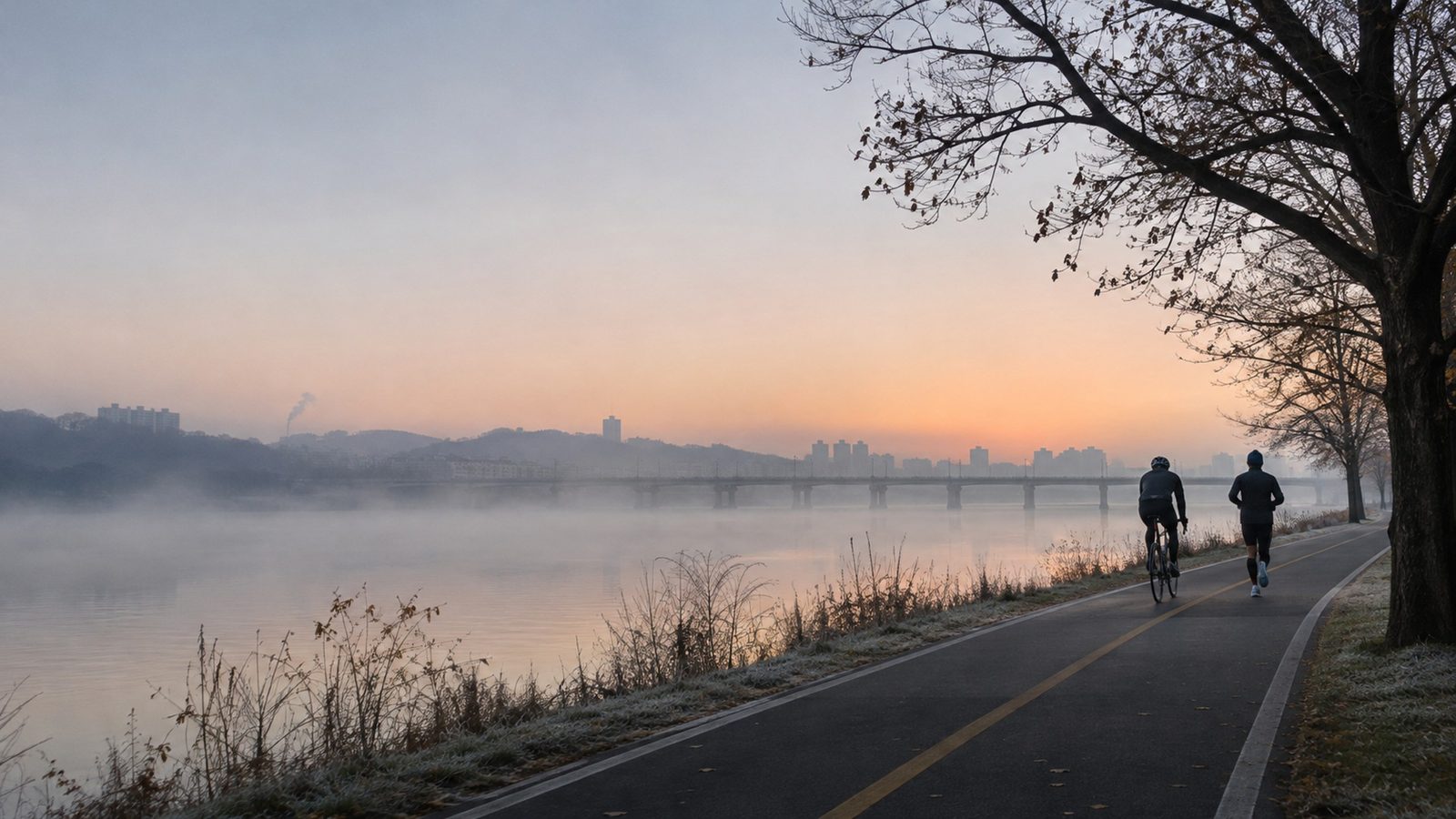
The same 32°F feels very different in a strong wind — Brooks notes that wind, rain and snow change how conditions feel. On an exposed route such as a riverside path, pick the next colder row. Plan your loop so you run into the wind first and with it on the way back, so you are not hit by cold wind after you have started sweating.
Hands, ears and neck cool first
Your torso warms up quickly, but fingers and ears get less blood flow and cool first. Instead of adding a body layer, bring gloves and a beanie; they are also easy to stuff in a pocket when you heat up.
The real risk is after the run
The moment you stop, wet clothing pulls heat out fast. Finish your route at your door, or carry a dry top and change right away.